 City of Racine
City of Racine
City of Racine
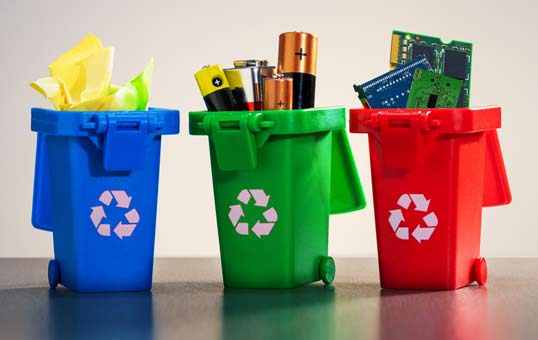
Many products used in the home, garden, garage and hobby shop contain hazardousAnything that involves danger ingredients and need to be used and stored safely. Once you decide to discard these products they become household hazardousAnything that involves danger wastes requiring proper disposal.
For more information on HHW, please visit the Wisconsin Department of Natural Resources (WI-DNR) page using the following link:
All hazardousAnything that involves danger products exhibit at least one of the following properties:

Toxic
Even in small quantities may immediately poison, or cause injury or death through repeated exposure, when inhaled into the lungs, eaten, swallowed, or absorbed through the skin (e.g. rat poison, pesticides, bleach).

Flammable
Usually liquids that easily ignite and burn (e.g. lighter fluid, spot and paint removers).

Corrosive
SubstancesA kind of matter with a specific composition and properties or vapors that can burn skin on contact and can eat away the surface of other materials (e.g. oven and toilet bowl cleaners).

Reactive
Substances that react with air, water or another substance to produce toxic vapors or explode (e.g. bleach when mixed with ammonia-based cleaners).
Check the label. Look for the following warning words:
POISON, TOXIC, CORROSIVE, VOLATILECharacterized by or subject to rapid or unexpected change, FLAMMABLE, INFLAMMABLEOf a substance, material burning very easily, COMBUSTIBLE, EXPLOSIVE,
DANGER, CAUTION, WARNING or HARMFUL.
These words will alert you to the nature of the product.
Most people think of “hazardousAnything that involves danger wastes” as wastes generated by industry, but many household products contain the same chemicals found in industrial hazardousAnything that involves danger wastes. Improper disposal of household hazardousAnything that involves danger wastes, such as throwing them away with your household trash, dumping them in storm drains, or into sewer
systems, can endanger your health, the health of others and the environment.
There are many reasons it makes sense to collect household hazardousAnything that involves danger wastes separately and keep them out of landfills. Some household hazardousAnything that involves danger wastes shouldn’t be land filled because they can be recycled. Less hazardousAnything that involves danger waste in the landfill means less hazardousAnything that involves danger leachate requiring expensive
treatment. The risk of ground and water pollution should leachate leak from landfills is also reduced. Solid waste collection and landfill workers can be injured by exploding aerosol cans, splashing chemicals or poisonous fumes created by mixed chemicals. Chemical reactions can also cause fires in solid
waste trucks.
Household hazardousAnything that involves danger wastes should never be poured onto the ground or down storm drains. Products such as motor oil contain toxic chemicals and metals (hydrocarbons, lead, zinc, arsenic, chromium and cadmium) that will contaminate groundwater, drinking water and freshwater wildlife habitats. Other
products may also have an adverse effect on water supplies and the environment.
Household hazardousAnything that involves danger wastes should never be flushed into down sewer drains because these wastes can kill the active bacteria at the waste water treatment facility. Waste water treatment facilities cannot remove all heavy metals and these may contaminate sewage sludge, water supplies and animal
habitats.