 City of Racine
City of Racine
City of Racine
Drug overdoses, especially those involving opioids like fentanyl or heroin, present a public health crisis in Racine and across the United States. These powerful drugs have led to a sharp rise in overdose deaths, straining healthcare, law enforcement, and support systems. The widespread presence of fentanyl, often mixed with other substancesA kind of matter with a specific composition and properties, makes drug use increasingly dangerous and deadly. Addressing this crisis requires urgent action, including access to treatment, harm reduction efforts, and public education.

Local Data
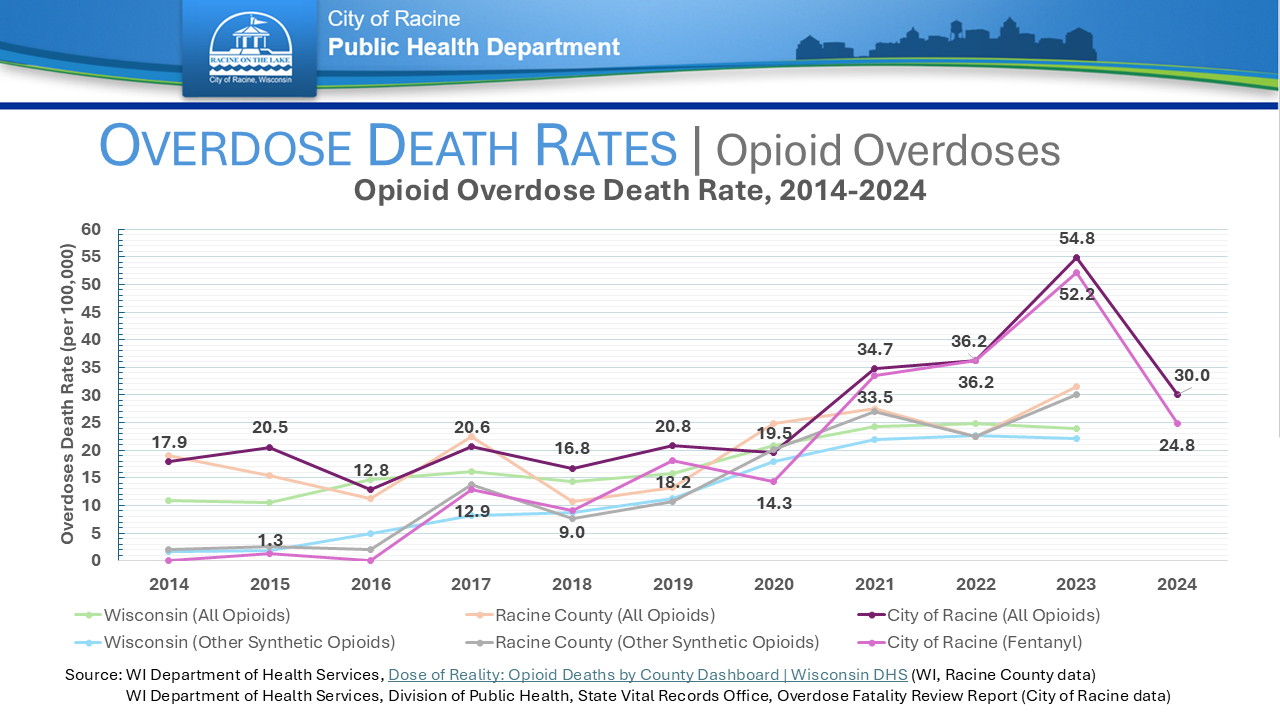
The City of Racine is experiencing similar trends in drug and opioid overdoses when compared to Racine County, Wisconsin, and the United States as a whole. From 2020 through 2023 in the City of Racine:
Statewide and National Data and Resources
The drug and opioid overdose epidemic continues to be a public health crisis both locally and nationally. In the United States:
More resources for statewide and national drug overdose data:
The Public Health Department and other local partners have a number of initiativesThe ability to assess and initiate things independently. underway to combat the opioid epidemic and prevent drug and opioid overdose deaths in our community. Current activities include:
The Public Health Department operates Public Health Vending Machines to provide greater access to free, lifesaving Narcan and other public health interventionsIntentional action to change a situation, with the aim of improving it or preventing it from getting worse.. Our Public Health Vending Machines dispense items at no cost to the recipient.
Items available from the vending machines include Narcan Nasal Spray, fentanyl test strips, xylazine test strips, hygiene kits, condoms, emergency contraception, medication disposal bags, and other items. Note: The selection of items may vary by location and throughout the year.
Public Health Vending Machine locations:

Corinne Reid Owens Transit Center
1409 State Street
Racine, WI 53403

Hours
Sunday – Saturday, 6:00 am – 9:00 pm
Racine Public Library
75 Seventh Street
Racine, WI 53403
Hours
Accessible 24/7
(Machine is located outdoors)
Dr. John Bryant Community Center
601 Caron Butler Drive
Racine, WI 53403
Hours
Monday – Friday, 8:00 am – 6:00 pm
Several organizations offer meetings in Racine and other nearby areas to aid in overcoming addictions to injectable and other drugs. They include: