 City of Racine
City of Racine
City of Racine
The drug and opioid overdose epidemic remains a pressing public health crisis, claiming hundreds of lives each year and devastating families and communities. This dashboard was created to help the public stay informed about the impact of substance use in our community while connecting residents to prevention resources, Naloxone access, and support services. An informed community is a safer and better prepared community. View the Drug Overdose Dashboard to explore trends in drug related overdoses and deaths in the City of Racine.
This dashboard provides insight into substance overdose trends in the City of Racine, including EMS overdose responses by the fire department, overdose death data obtained through vital records, and syndromic surveillance data tracking emergency room visits related to opioids, heroin, cocaine, and other illicit drugs. All data displayed in the dashboard has been de-identified to protect patient privacy.
The dashboard built in filters on the dashboard to get more in-depth information about year, demographics and more. The EMS and Emergency Room Visits graphs allow users to filter data by timeframe and view total incidents or percent visitation for the selected period. The Substance Abuse-Related Deaths section also includes demographic filters and a breakdown of substancesA kind of matter with a specific composition and properties involved in overdose deaths. Because a single overdose may involve multiple substancesA kind of matter with a specific composition and properties, the combined total of related drugs may exceed the total number of overdose deaths.
The Electronic Surveillance System for the Early Notification of Community-Based Epidemics (ESSENCE) is a secure, web-based platform that uses syndromic surveillance data to help public health professionals monitor health trends and identify potential public health concerns, including disease outbreaks, severe weather impacts, and substance-related emergencies. Through near real-time emergency department data from the National Syndromic Surveillance Program (NSSP), ESSENCE provides valuable insight into emerging health patterns within our community.
This dashboard uses patient ZIP code data to monitor and map emergency room visit trends within the City of Racine. The ZIP codes used are 53402, 53403, 53404, 53405, and 53406. Although these ZIP codes extend beyond city boundaries, they provide a reliable way to capture health trends affecting City of Racine residents.
By providing timely and actionable data, this dashboard strengthens our understanding of overdose and substance use trends and supports ongoing efforts to respond to the opioid epidemic through prevention, education, and community outreach.
DASHBOARD HERE…MAYBE
An overdose happens when someone takes too much of an illicit drug or a combination of them. It may be difficult to recognize if someone is experiencing an overdose, so if you’re unsure, it’s safest to treat the situation as an overdose. Acting quickly can save a life.
The most common signs to look for include:
Responding to an overdose incident might be scary, but it’s better to be prepared for any event. Here are a few things to do when you are responding to an overdose:
The widespread availability of both illicit substancesA kind of matter with a specific composition and properties, such as fentanyl and heroin, and the misuse of prescription opioids continue to drive overdose rates. Preventing opioid overdoses starts with education, safe use, and community awareness. Individuals should take prescription opioids only as directed, avoid mixing them with alcohol or other drugs, and seek help if they develop dependence or misuse. Keeping Narcan (naloxone) on hand can save lives.
Narcan is a safe, easy-to-use medication that can quickly reverse the effects of an opioid overdose. Anyone who suspects an overdose should call 911 immediately and administer Narcan if available. Expanding access to Narcan and encouraging its use among family members, friends, and community members can make a critical difference in preventing overdose deaths.
You can receive Narcan, other resources and information through our Syringe Access program at the City of Racine Public Health Department or through our Mail Me Narcan program.
To receive free Narcan (naloxone), visit one of our three public health vending machines throughout the City of Racine. The vending machines also contain other supplies to help protect yourself, friends and family.

Corinne Reid Owens Transit Center
1409 State Street
Racine, WI 53403

Hours
Sunday – Saturday, 6:00 am – 9:00 pm
Racine Public Library
75 Seventh Street
Racine, WI 53403
Hours
Accessible 24/7
(Machine is located outdoors)
Dr. John Bryant Community Center
601 Caron Butler Drive
Racine, WI 53403
Monday – Friday, 8:00 am – 6:00 pm
A variety of businesses, organizations, and agencies throughout Racine have partnered with the Public Health Department to provide free Naloxone (Narcan), overdose prevention supplies, and other harm reduction resources to community members.
Use the Harm Reduction Map to quickly locate nearby sites offering Naloxone, fentanyl test strips, Xylazine test strips and other prevention resources. Simply filter by the item type you need to find participating locations. While the map is updated regularly, some items may occasionally be out of stock at certain locations, including Public Health vending machines or community partner sites.
The City of Racine Public Health Department is committed to expanding access to Naloxone and overdose prevention resources to help save lives, reduce harm, and connect residents with treatment, recovery, and support services throughout the community.
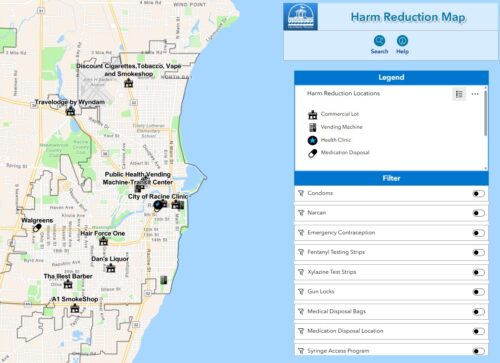
Here is a text-based version of the map locations to improve accessibility and make it easier to browse the information in a clear, straightforward format.
Travelodge by Wyndam
Services: Condoms
Dan's Liquor
Services: Condoms
La Mexicana
Services: Condoms
A1 SmokeShop
Services: Condoms
Buck's Lounge
Services: Condoms
Pepi's Pub & Grill
Services: Condoms
Hair Force One
Services: Condoms
Discount Cigarettes, Tobacco, Vape and Smokeshop
Services: Condoms
Tha Illest Barbershop
Services: Condoms, Narcan
City of Racine Police Department
Services: Medication disposal
Walgreens
Services: Medication disposal
Hospitality Center
Services: Condoms, Narcan
City of Racine Public Health Clinic
730 Washington Ave, Room 4 (Lower Level)
Services: Condoms, Narcan, Syringe Access, Emergency Contraception, Fentanyl Testing Strips, Medication Disposal Bags, STI Testing/Treatment, TB Skin Testing, Car Seats checks, Crib for Kids, Immunization
If you are traveling to other parts of the state or are visiting from outside the area, you can explore resources from the Wisconsin Department of Health Services (DHS) to learn more about where to access free Narcan (Naloxone). DHS also provides a statewide map of locations offering free Naloxone and other overdose prevention resources.