 City of Racine
City of Racine
City of Racine
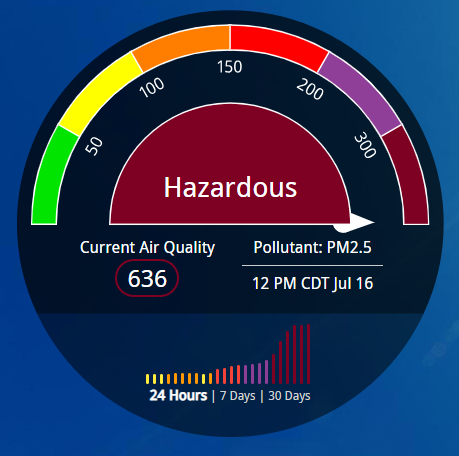
Smoke from wildfires burning in Canada and northern Minnesota is drifting into southeastern Wisconsin, and air quality in the Racine area is expected to remain poor over the next few days.
Wildfire smoke can irritate your eyes and lungs and worsen some medical conditions, like asthma. If you start experiencing symptoms like coughing, trouble breathing, stinging eyes, or a scratchy throat, head indoors right away. If your symptoms don’t improve, contact your doctor.
Here’s how to protect yourself while the air quality is poor:
There are simple, free tools you can use to check air quality conditions in Racine:
Anyone can be affected by wildfire smoke, but some people are at higher risk, including:
If that’s you, or someone you love, it’s even more important to plan ahead and limit time outside on smoky days.
The AQI uses six color-coded categories to show how clean or polluted the air is, who needs to be concerned, and what to do. Check out AirNow’s simple guide to the AQI at airnow.gov/aqi/aqi-basics to help plan your outdoor activities.
Keep smoky air out of your home by closing windows and doors and running your air conditioner and air purifier, if you have them. If an air purifier isn’t in your budget, you can make your own with a box fan and a furnace filter. The EPA has simple instructions at airnow.gov.
Don’t have air conditioning? Staying inside with the windows closed can be dangerous during hot weather. If your home gets too hot, go somewhere with air conditioning, like the Racine Public Library (75 7th Street), a shopping center, or another air-conditioned public space.
Information based on resources provided by Public Health Madison & Dane County. Our thanks to them for their ongoing work to protect public health.